Morfloor » Versaille Pattern
The Legacy of Symmetry; Classical Grandeur in Contemporary Architecture.
Versailles is more than a simple flooring pattern; it is a designed panel. In this layout, wood pieces are arranged within square, lattice-like frames—a structure that has long symbolized precision and authenticity in grand residences and enduring architectural spaces.
Unlike other patterns that emphasize the continuity of lines, Versailles is centered on the idea of a focal point and symmetrical repetition. It defines a space as though it were a framed work of architecture.
In the Versailles pattern, each panel consists of pieces skillfully interlocked through the craftsmanship of traditional woodworking. This square-within-a-square geometry creates a composition in which wood is no longer perceived as a linear material, but as part of a dignified, three-dimensional grid. Repeated side by side, these squares form a surface that combines the order of a mathematical grid with the natural warmth of wood grain.
One of the defining qualities of Versailles is its ability to create a sense of focus. In large spaces, this pattern gives the floor an identity of its own—as though a wooden carpet were laid across the room. Unlike the dynamic lines of Chevron or Herringbone, Versailles offers a profound sense of visual calm. It gives expansive spaces a feeling of completeness without making them appear busy, as its symmetry invites the eye into a unified and tranquil order.
Choosing Versailles is a decision to elevate the scale of a space. This pattern lends rooms a monumental presence. Whether in a classically styled residence or a contemporary setting in need of a defining visual focal point, Versailles transforms the space with the same enduring power that has characterized it throughout history.
Installing Versailles demands a level of precision far beyond that of conventional parquet flooring. Each panel must be crafted to exacting, near-microscopic tolerances, ensuring that it aligns seamlessly with the next, without the slightest gap or irregularity. This is the art of panel-making—where meticulous woodworking meets interior design. In Versailles, every intersection, angle, and inner square frame forms part of a unified technical language.
With Versailles, parquet is no longer regarded merely as a material, but as a structural element. This pattern transforms the floor from a simple surface into a designed architectural feature. The result is a surface that does not simply withstand the passage of time; through its timeless geometry, it becomes an enduring part of the building’s identity.
Versailles evokes the grandeur of classical architecture, where geometry embraces stillness. The repetition of squares is more than a pattern; it is the repetition of a sense of assurance woven into the very fabric of space.

Flowing Grain Within a Frame
Versailles is an ideal choice for Oja/Elm, bringing the wood’s natural dynamism into a disciplined geometric framework. The contrast between Oja’s fluid, expressive grain and the clean, rigid lines of Versailles panels creates a striking visual tension. The result is a surface that, despite its geometric order, feels intensely vibrant and dynamic—a choice for spaces seeking a distinctive balance between discipline and energy.
The Grandeur of Shadows
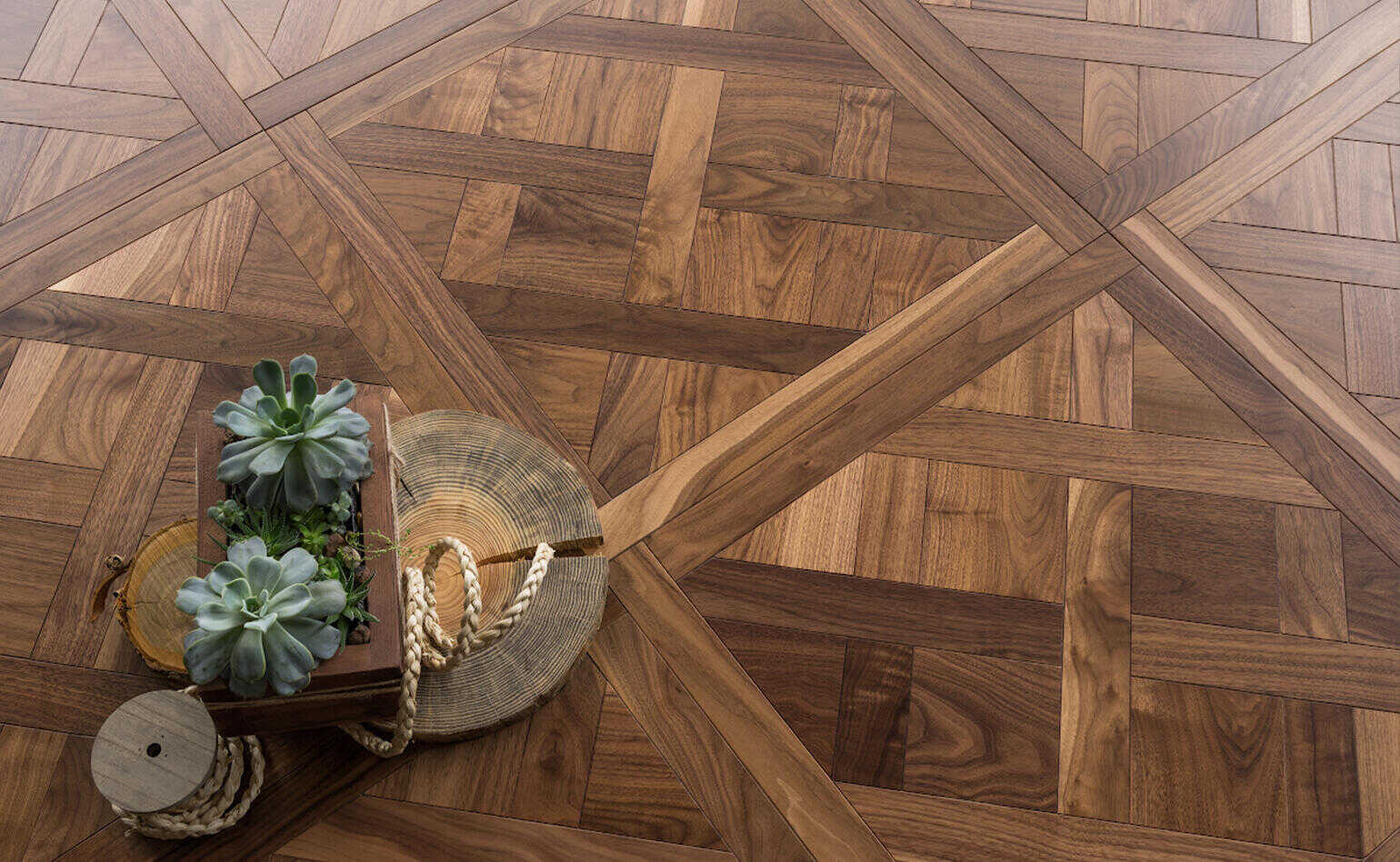
Walnut takes on an exceptionally luxurious and captivating character in the Versailles pattern. The richness of its color and the depth of its grain give each panel a three-dimensional, jewel-like quality. With walnut, this arrangement makes a space feel not merely beautiful, but truly precious. Within this geometric frame, walnut blends the historical grandeur of Versailles with its own contemporary warmth.
Historical Authenticity
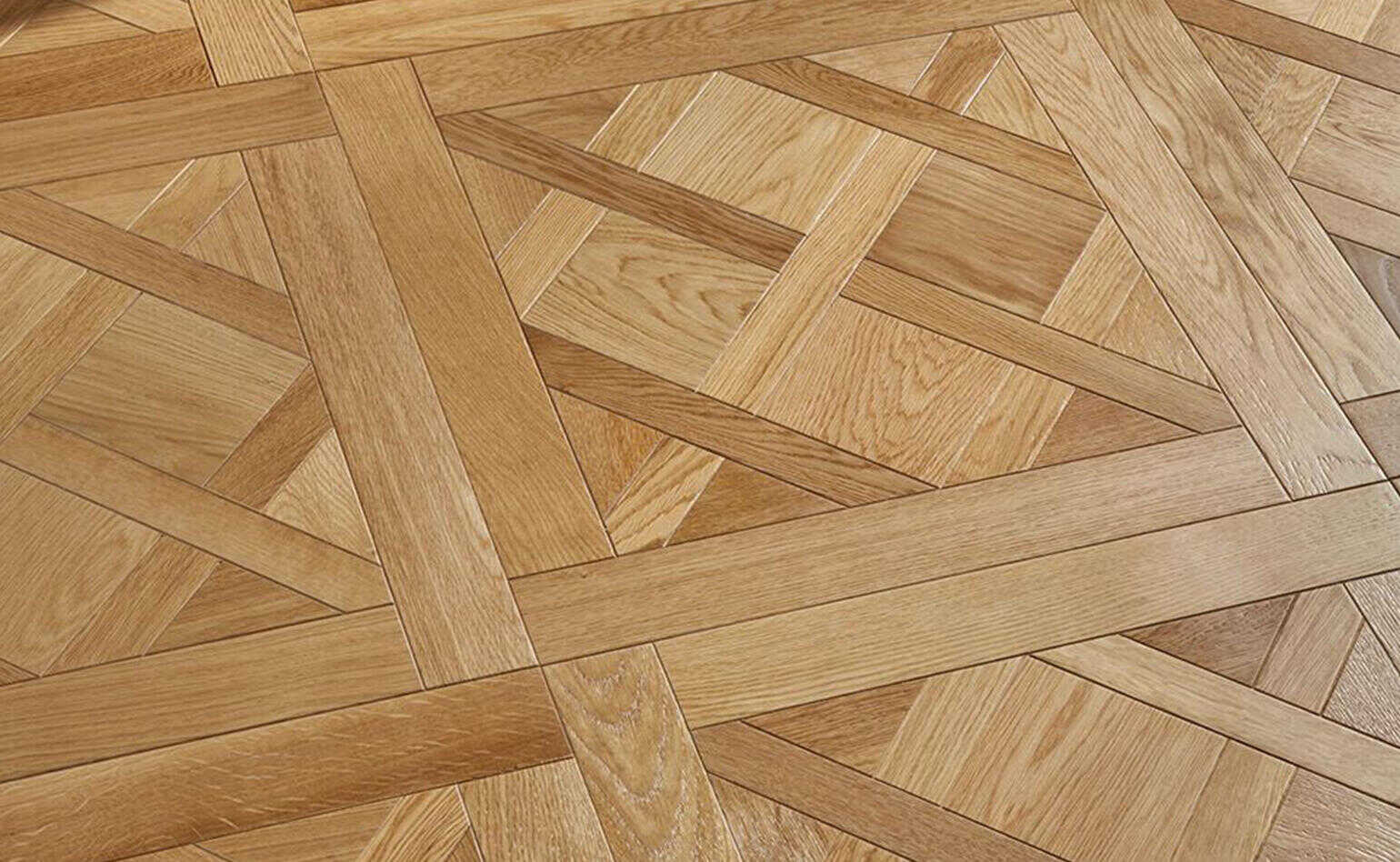
Oak takes on a distinctly refined, classical character in the Versailles pattern. With its balanced grain and light tones, it beautifully accentuates the geometry of the Versailles squares. Here, oak is seen not merely as a durable wood, but as an integral part of a historic composition—its presence bright, honest, and imbued with classical elegance.
The Quadrix Parquet Collection is our interpretation of the historic Versailles parquet. Each Quadrix family is formed through the interweaving and intersection of small wooden pieces. Although the finished Quadrix patterns comprise countless individual wood elements, they are meticulously assembled into precisely crafted panels, designed to fit seamlessly alongside one another, bringing every intersection into perfect balance.
From a geometric perspective, the intersections in Quadrix are mathematical nodes. The synthesis of geometric concepts with respect for their historical aesthetic origins is an art that can only be achieved through the meticulous handcraftsmanship of master woodworkers specializing in traditional geometric joinery.