Morfloor » Herringbone Pattern
Where the rhythm of repetition connects classical elegance with contemporary architecture.
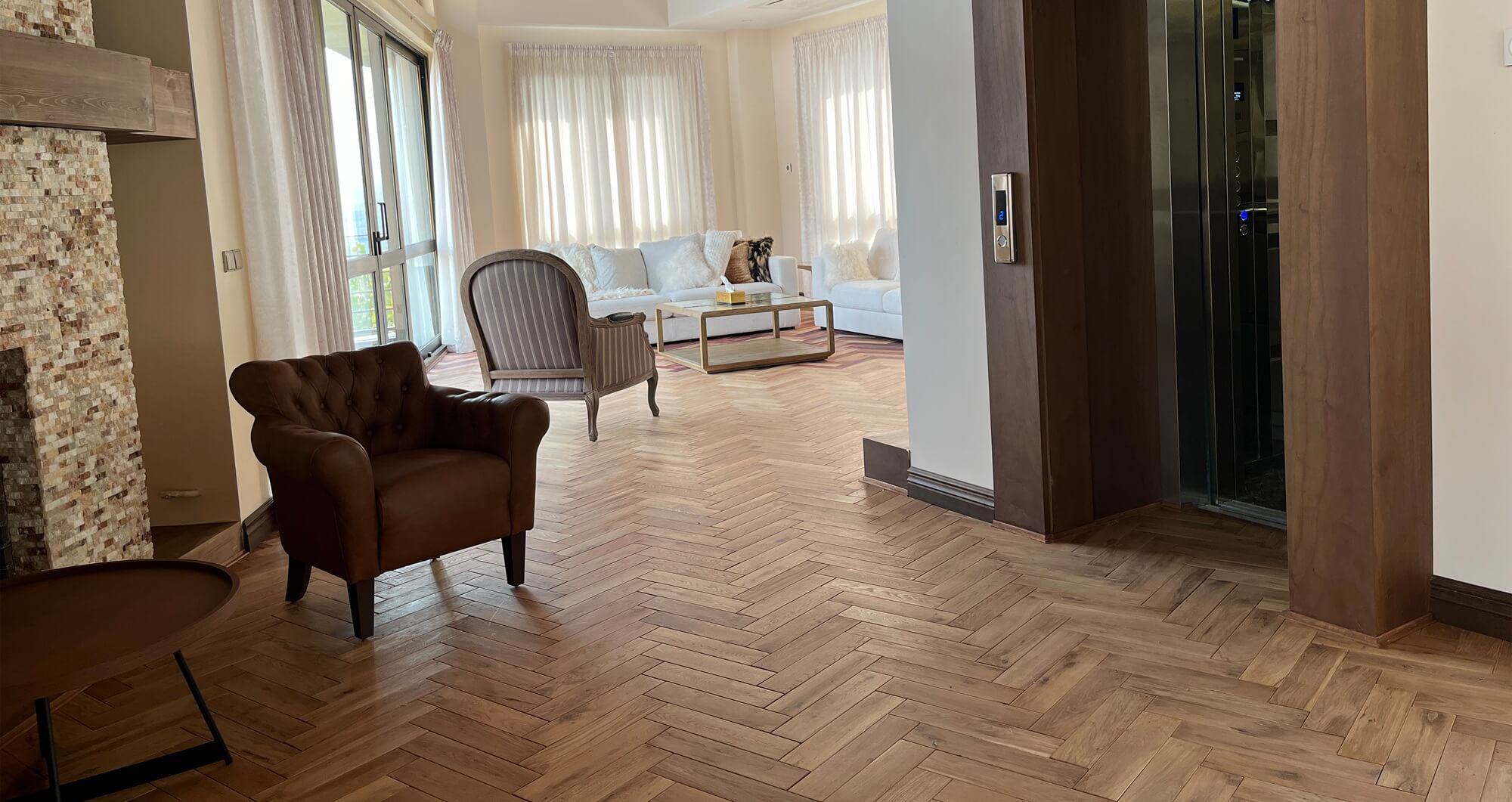
The Herringbone pattern is far more than a flooring installation technique; it is a classic expression of architectural order in interior design. Rooted in traditional and historical structures, this pattern has evolved into a contemporary design language in the hands of modern architects.
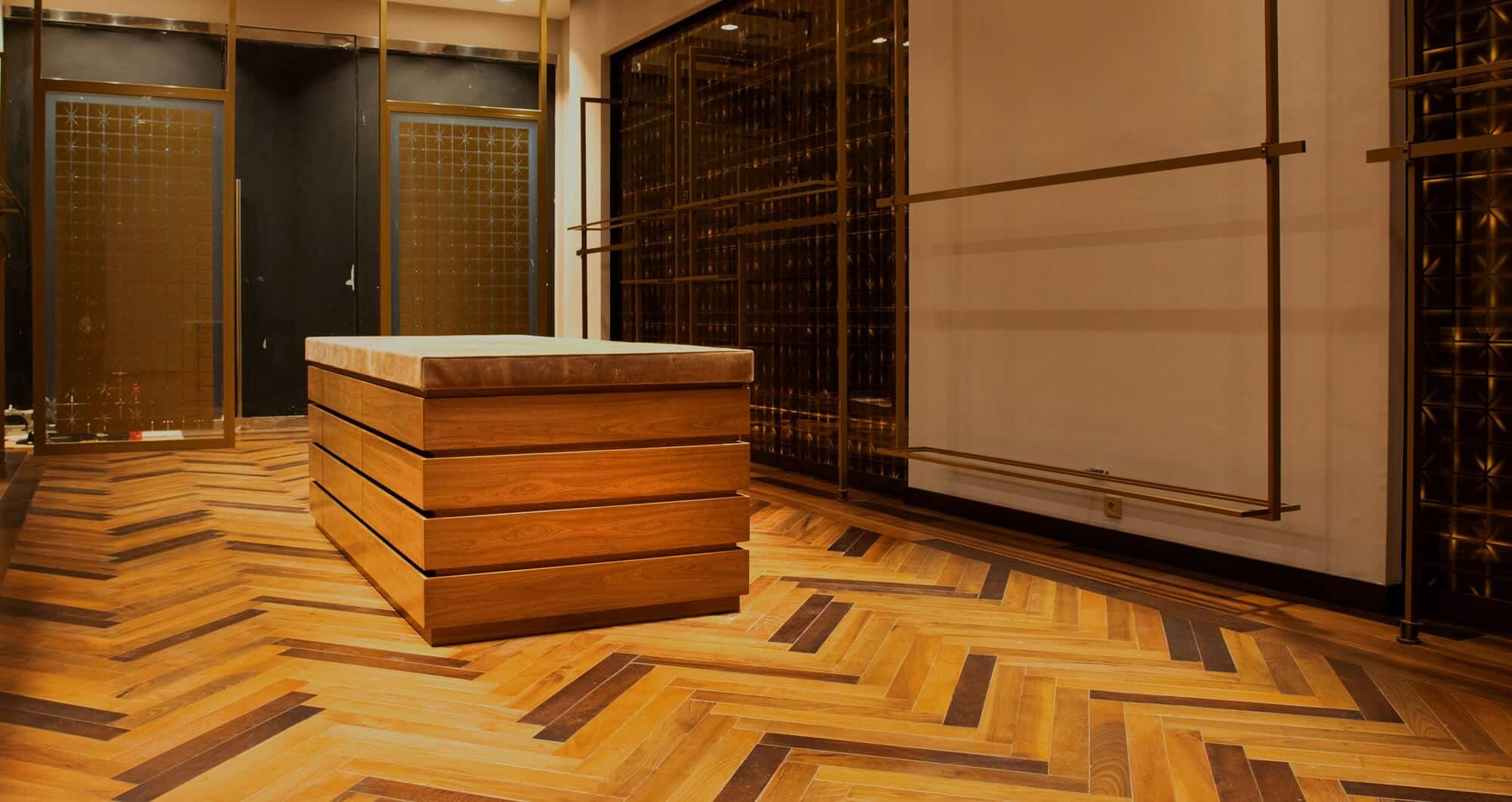
Unlike Straight Lay, which emphasizes continuity and visual stillness, Herringbone focuses on rhythm and energy. The precise repetition of planks at carefully defined angles creates a geometric texture across the floor, transforming what would otherwise be a two-dimensional surface into a dynamic, almost three-dimensional architectural element.
In this pattern, wood is no longer merely a floor covering; it becomes a structured design element that gives the space a distinct visual identity.
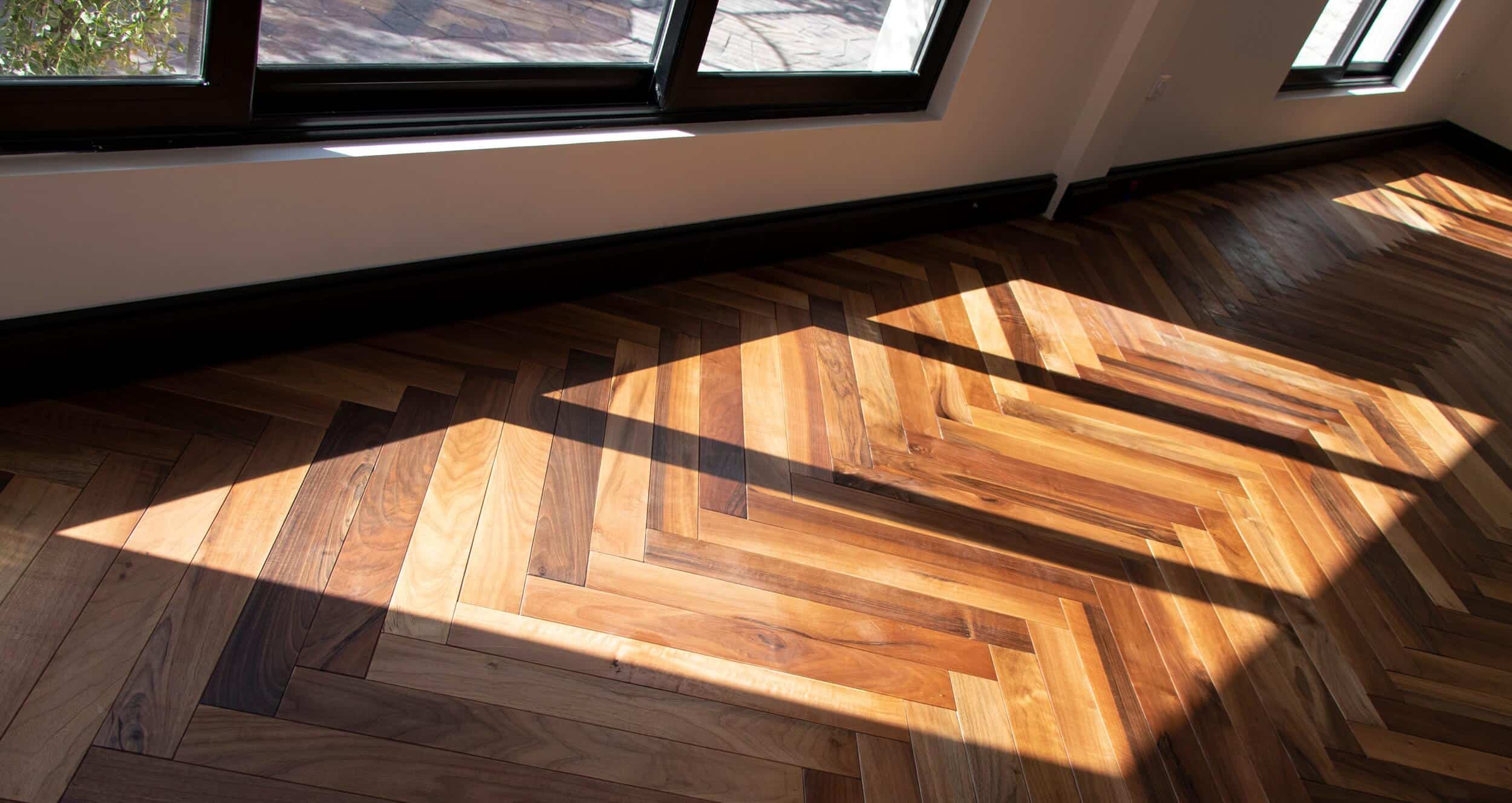
One of the most distinctive and captivating qualities of Herringbone is the way wood responds to light and changing viewing angles. Due to the intersecting arrangement of the planks, each piece is positioned at a different angle relative to the light source. This geometric variation creates a subtle interplay of light and shadow across the floor, with alternating areas of depth and brilliance emerging as sunlight or ambient lighting shifts throughout the day.
This visual dynamism ensures that Herringbone never feels repetitive. It is as though the floor transforms with every step and every passing hour, revealing remarkable visual depth that no flat, uniform flooring pattern can replicate.
Herringbone is a powerful tool for redefining spatial proportions. In expansive interiors and open-plan spaces, its rhythmic pattern introduces classical warmth and a distinctive sense of elegance, preventing large spaces from feeling visually cold or impersonal.
In smaller interiors, when installed using appropriately scaled planks, Herringbone can enrich the space and introduce a sense of energy through its structured geometric composition.
The beauty of Herringbone lies in its ability to bring rigid geometric order into harmony with the organic character of natural wood. Its sharp, angular lines meet the knots, grains, and irregular patterns of the timber, creating a remarkable balance between precision and nature.
Herringbone installation is a true test of precision and craftsmanship. While simpler flooring layouts allow greater tolerance, Herringbone demands meticulous attention to alignment, angle setting, and joint connections. Even a millimetre of error in the initial layout can gradually disrupt the entire geometric composition across the floor.
For this reason, at Morfloor, Herringbone installation is approached not merely as a flooring operation, but as an engineering project.
We see this pattern as a carefully designed structure that must preserve both its technical integrity and visual beauty over time. It is where pure geometric order serves the flawless expression of natural wood.

Herringbone is the geometry of authenticity. In this pattern, wood is more than a floor covering; it becomes the very fabric that defines the space, as light dances between its angles. It is a story of magnificent repetition, elevating a space from simplicity to an exquisite richness of detail.
Strength in Geometry
Mesquite, laid in a herringbone pattern, reveals its density and hardness through a structured, architectural composition. Its reddish-brown tones and dense grain gain greater depth through the repeating herringbone arrangement, creating a surface that feels bold, warm, and deeply rooted. In this pattern, Mesquite makes a strong and distinctive statement—grounded, resilient, and dignified.
Movement in the Grain of Wood
Elm take on a remarkably lively presence when laid in a herringbone pattern, thanks to their expressive grain and flowing natural patterns. The herringbone arrangement adds depth and dimension to the wood’s inherent movement, transforming the floor into a dynamic surface full of character. This combination is ideal for spaces seeking warmth, rhythm, and a strong visual identity.
Grandeur in the Rhythm of Shadows
Walnut laid in a herringbone pattern reveals the depth of its color and the intricacy of its grain in a rhythm of quiet grandeur. The intersecting angles of this layout accentuate walnut’s natural darker tones, grain patterns, and contrasts. The result is a rich, artful surface that embodies both elegance and movement.
A Calm and Timeless Geometry
Oak laid in a herringbone pattern creates a remarkable balance between geometric order and natural warmth. Its light grain and balanced texture come together in the repeating herringbone arrangement, creating a surface that feels both vibrant and serene. This pattern lends oak a more classical character—authentic, distinctive, and enduring.
The Elements Series is the result of our abstract exploration of floor geometry. Designed around the simplest quadrilaterals, Elements parquet develops into some of the most intricate floor tiling patterns. Its formal complexity emerges from this very simplicity—a quality that sets the series apart. Elements is a collection of small, simple tiles whose complex geometries are created solely through repetition. Here, form does not rely on grand gestures or elaborate textures; instead, it emerges from a continuous, orderly rhythm. The challenge of Elements is rhythm.
Tar, Raj, Sok, and Rokh are the names of the four product families within the Elements Series, together offering dozens of distinct designs. All four families are rooted in the historical tradition of parquet flooring, yet they move beyond the past, looking firmly toward the future.